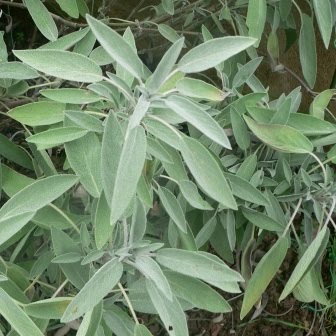
The herb of the week is Sage (salvia officinalis).
Sage is one of the herbs my mother grew when I was a kid. I didn’t know a lot about it then, but I knew that if you picked a leaf and rubbed it between your finger and thumb, it smelled really good.
Growing up out West, I heard constant references to “sagebrush“, and although sagebrush (artemisia tridentate) also has a distinct smell, it is important to note that the two are separate, unrelated, and distinctly different plants.
On a side note, sagebrush was widely used medicinally by the Western Native Americans. It has a very potent oil, which will kill internal parasites and other bacteria. It will also make you "sicker than a dog” for about 48 hours, so I don’t necessarily recommend using it.
But back to Sage, better known as Common Sage, or Kitchen Sage.
Although there are multiple varieties of this particular member of the mint family, when I use the term Sage in this article, I am referring to Common Sage (salvia officinalis)
The word “Sage”, comes from the Latin
salvia, which is derived from
salvus, meaning healthy.
Although the effectiveness of Sage is open to debate, it has been recommended at one time or another for virtually every ailment. Modern evidence supports its effects as an anhidrotic antibiotic, antifungal, astringent, antispasmodic, hypoglycemic and tonic.
Interestingly enough, while researching the history of the name, I stumbled upon the history of the word “sage’ in another context. A wise person, especially one who can offer good advice, is often referred to as a sage, and the word is also applied to the sound advice that they give. Because of the Latin reference above initially one may think that sage advice is healthy advice, and perhaps it is, but that particular usage of the word actually derived from the Gallo-Roman
sabius, which derived from the Latin
sapere meaning have good taste.
So, we start with a plant that we can argue is healthy, and has good taste. What more can you ask for?
Growing Sage is not too challenging. Sage requires a little sun, and a bit of water, but is relatively low-maintenance. English Folklore suggests that Sage will grow best at homes where the wife is dominant.
Sage can be grown from seed, but the seed has a very low germination rate and you will likely have more success with a transplant. Sage is a blue-gray evergreen shrub, that can and will grow into a substantial bush if allowed, or can be kept trimmed into tight border elements if desired. It blooms in late spring or early summer, with long spikes of blue to purple flowers.

Sage leaves are at their peak flavor for harvesting shortly before, and immediately after the plant blooms. Your plant may, or may not bloom the first year, but it is recommended that you refrain from harvesting the first year, in order to allow the plant to establish itself. This doesn’t mean you can’t snip a leaf or two from time to time, but a full harvest may be more of a shock than a young plant can handle.

A sage plant can start to lose some of it’s flavor after 3-4 years. For maximum flavor, some gardeners suggest that you keep a steady supply of new cuttings or shoots growing to replenish the older plants.
Our sage plant is about 8 years old, and still has a full, rich flavor, so I take that advice with a grain of salt personally, but I wanted to pass it on, lest someone have a sage plant that is losing its’ flavor.
To fix this problem, if you do have a fatigued plant, simply “earth up” the plant in the fall after the first frost, but before the ground has frozen. This is done by covering the entire plant with soil, leaving only the tips of the banches exposed. This will force those tips to send out new root systems, and in the spring, when you are ready to plant your garden, you will have a new sage plant, complete with roots, growing from each of the branch tips.
As I said, I have not yet felt a need to do this.
Sage can be harvested throughout the season a few leaves at a time, as needed. Fresh sage has a different taste from dried sage. Leaves can be frozen individually and kept in a ziplock baggie in the freezer. When dried, the leaves have a tendency to become very brittle, and I like to run them through a food processor to break them down. For maximum flavor wait until you are ready to use them to do this. For maximum convenience, do it as soon as the leaves are dry, so you will have a constant supply of dried crumbled sage leaves when you are ready top cook.
If you feel that you lost a bit of flavor in the drying or grinding process, then when you are cooking, sprinkle in a bit more to compensate for it.
Sage has a very long history of medicinal use. Its antiseptic qualities make it an effective gargle for the mouth where it is said to heal sore throats. The leaves applied to an aching tooth may relieve the pain.
Sage is also used internally in the treatment of digestive issues, excessive lactation, night sweats, excessive salivation, profuse perspiration, anxiety, depression, female sterility and menopausal problems. Many herbalists believe that the purple-leaved forms of this species are more potent medicinally. This remedy should not be prescribed to pregnant women or to people who have epileptic fits. The plant is toxic in excess or when taken for extended periods - though the toxic dose is very large. Externally, it is used to treat insect bites, skin, throat, mouth and gum infections and vaginal discharge.
Sage Tea or infusion of Sage can be used to treat the delirium of fevers and in the nervous excitement frequently accompanying brain and nervous diseases and has considerable reputation as a remedy, given in small and often-repeated doses. It is considered a useful medicine in liver complaints, kidney troubles, hemorrhage from the lungs or stomach, for colds in the head as well as sore throat and quinsy and measles, for pains in the joints, lethargy and palsy. A cup of the strong infusion may help to relieve nervous headache.
Sage also has multiple culinary uses, that have evolved over the years. In the 17th century, an English author, Parkinson, wrote: "
The Kitchen use is to boyle it with a Calves head, minced, to be put with the braines, vinegar and pepper to serve as an ordinary sause.to serve as a sawce for peeces of Veale.." Additionally, Clary sage ( Salvia sclarea), leaves could be "
taken dry, and dipped into a batter made with the yolkes of egges, flower and a little milke, and then fryed with butter until they be crispe."Madeline Wadja, a Master Gardener from Adams County PA, writes: Today we know that garden sage has many uses in the kitchen-none of which involves "braines," fortunately. She goes on to point out that, as a digestive aid, sage is often paired with fatty meats, such as pork and sausages. But is more commonly known for it’s use in poulty, especially stuffing.
Many herbs must be added toward the end of the cooking process, as heat starts to break down the essential oils, but sage is not one of them, and therefore can be added early to stuffings, roasted meats, or stews.
Try covering a pork roast with sage leaves before roasting; or gently separate with your hands the skin from the breast meat of a chicken or turkey, rub a little butter on the meat, then place a small sprig or two of sage under the skin on each breast, pat down the skin, then roast.
Heavy bean or split pea soups are tasty with a little sage added.
Try sage with onion rings (add 2 tablespoons minced sage to the batter for two large onions) or in apple dishes, such as baked apples, applesauce, or apple pie (3 tablespoons of minced leaves for a 9-inch pie).
A delicious bread pudding can be made by layering bread with apples, onions, Swiss cheese, and sage.
Sage is also a natural with eggplant, asparagus, winter squashes, mushrooms, string beans, stewed tomatoes, pumpkin, cherries, and blueberries.
Sage honey (about one-third cup minced leaves warmed with three-quarters cup mild honey) is a wonderful addition to tea or biscuits. Sage cider vinegar makes great marinades.
Marinate goat cheese with olive oil, peppercorns, garlic, and some small sage leaves. Or add one-quarter cup minced sage leaves to an 8-ounce package of cream cheese and let sit for at least an hour before spreading on bagel chips.
You can also throw a handful of leaves and branches on top of the coals at your next barbecue and let the smoke flavor your burgers, chicken or steak.
Or, if you are up for adventure, try this:
Sage Pecan Cheese Wafers (Makes 3 Dozen)
1 Cup (4 oz.) Shredded Sharp Cheddar Cheese
¾ Cup Flour
¼ Cup Chopped Pecans (or Walnuts)
¼ tsp. Rubbed Sage
1/8 tsp. Ground Red Pepper
1/4 tsp. Salt (one-fourth)
One-third-Cup Butter or Margarine in Small Pieces
Process first six ingredients in a food processor for 10 seconds. Add butter a piece at a time while processor is running until mixture forms a ball. Roll to one-fourth inch thickness on lightly floured surface; cut with 1 and one-half inch round cookie cutter. (The dough can also be shaped into a long roll, refrigerated, then sliced and baked.) Bake at 350 degrees on ungreased cookie sheet 12-14 minutes until edges turn golden.
Sage has many uses in magic and superstition as well; Sage absorbs negativity and misfortune. It drives away disturbances and tensions, and lifts the spirits above the mundane cares of life. Burn it to consecrate a ritual space. Carry it as an herb of protection. Use it in the ritual bath and chalice. Tradition holds that those who eat sage become immortal in both wisdom and years. Sage is used in wish manifestations and to attract money. Smolder to promote healing and spirituality. Carry to promote wisdom. Use in spells for: Protection; Wisdom; Health; Money and Riches; Spirituality
The Native Americans have long used sage in their cleansing and purification rituals, and Wiccans have used it in banishing, vision quests and fertility and healing rituals, as well as a way to add deep earth respect to other practices.
So, if you want to be rich, clean, wise and positive, and live forever, sage should definitely hold a prominent place in your garden.